








On our gold rates page today, the average 24K rate across the 136 cities we track is ₹14,951 per gram. The average 22K rate is ₹13,705. That ₹1,246 gap nudges many buyers toward a quiet assumption: 22K is the budget version of the same gold, and 24K just costs more.
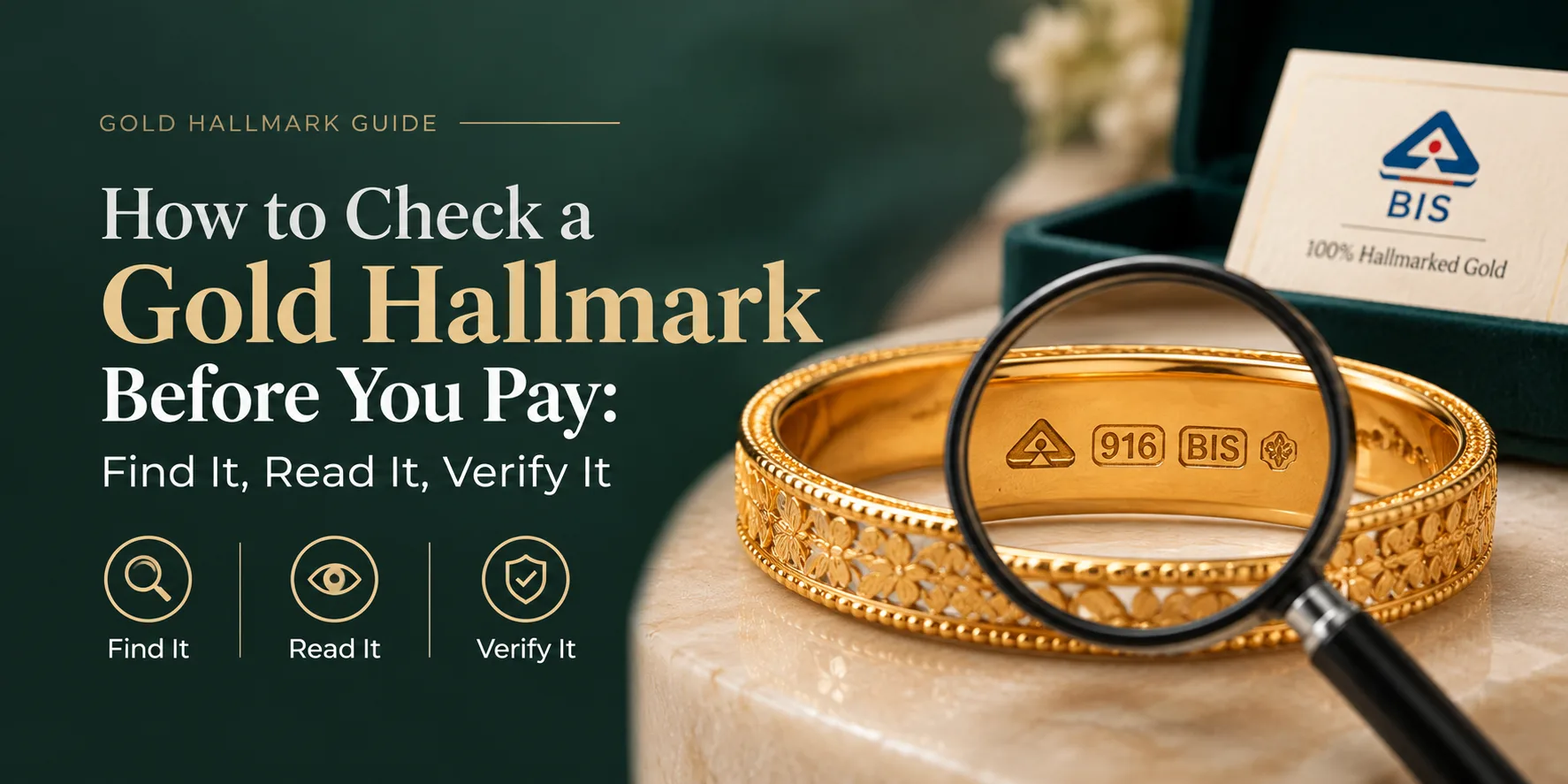
It is not the same gold, and the gap is not a discount. Two of our earlier guides already cover the hallmark number chart and the in-shop verification steps, so this one does not repeat them. Read hallmark purity numbers explained and how to check a gold hallmark for those.
Here we work on what they leave open: why 24K cannot be worn, what the ₹1,246 really buys, how making charges change your true cost per gram of gold, and which grade belongs in a ring, a necklace, a coin, or a bar.
All rates in this post are averages from our Gold Rates page on 21 October 2026. They move daily.
What 22 Karat Gold Means
Pure gold is split into 24 equal parts, and the karat number says how many of those parts are gold. So what is meant by 22 carat gold is plain: 22 parts gold and 2 parts other metal. That is also the answer to "22k means" and "22k means in gold".
Indian shops usually spell it carat. Strictly, carat is a gemstone weight and karat is the gold measure, but on a price tag they mean the same thing.
The arithmetic gives the 22k gold percentage directly: 22 ÷ 24 = 91.67%. The BIS hallmark writes this as 916, which is 91.6% fineness. The remaining 8.4% or so is normally silver and copper. At the other end, 24K is 24 of 24 on paper, but no refiner reaches a literal 100%. Hallmarked 24K coins and bars are 99.9% (999), and some refiners go to 99.99%.
24K | 22K | |
|---|---|---|
Parts gold | 24 of 24 | 22 of 24 |
Fineness | 99.9% (999) | 91.6% (916) |
Other metals | about 0.1% | about 8.4% |
Colour | Deep, rich yellow | Warm yellow |
Main use | Coins, bars, investment | Jewellery |
Why 24K Gold Is Too Soft for Jewellery
Gold sits at about 2.5 to 3 on the Mohs hardness scale, between a fingernail and a copper coin. It is also so malleable that one gram can be beaten into a sheet roughly a square metre across. Those traits are why goldsmiths can work it so finely. They are also why pure gold struggles as something you wear every day.
Here is what goes wrong with 24K jewellery in daily use.
Chains stretch. Thin links elongate under the pull of a pendant, and a chain that has kinked once rarely sits straight again.
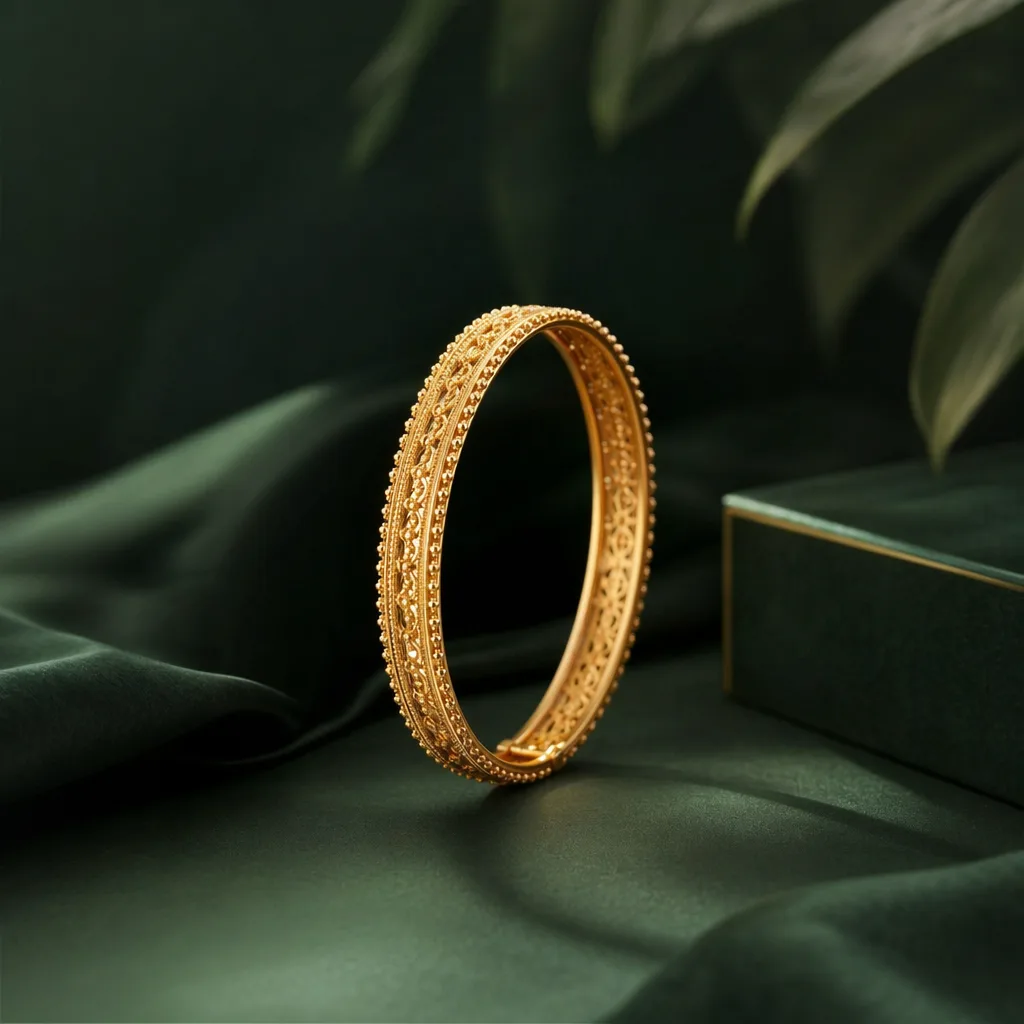
Bangles lose their shape. A knock against a door frame or a table edge dents a 24K bangle, and a kada slowly ovals as it is worn.
Stones loosen. Prongs and claws hold a stone by spring tension. Pure gold has very little, so settings relax and stones shift.
The surface scratches on every contact. Polishing removes the marks and also removes metal, which is gold you have paid for.
Clasps and hinges wear out first. These small moving parts take the most abuse and have the least material to spare.
Jewellers fix this by alloying. Copper and silver mixed into gold disturb its crystal structure, which makes the metal stiffer and harder to deform. Copper pushes the colour toward red, silver pulls it paler, and the mix decides the final tone.
At 22K the alloy is just enough to hold a shape through years of wear while keeping the rich yellow that Indian buyers expect from gold. Go lower, to 18K, and you gain hardness, which is why stone settings use it, but you lose colour depth and gold content per gram.
Even 22K is soft by metal standards. A heavy bangle worn for decades loses a little weight at the points where it touches surfaces. That slow loss is why a thicker, sturdier design often outlasts a delicate one in the same grade.
24K jewellery does exist. Some shops sell light pendants, thin bangles and chains in 24K, and they are wearable. They dent and scratch faster, so they suit occasional wear better than daily wear.
Which Is Pure Gold, 22K or 24K?
24K is pure gold, at 99.9% or better. 22K is a deliberate alloy. It is still real gold, and it is not "impure" in any sense that should worry you. The question that matters is not which is purer but which purity your purpose needs. Purer gold wins as a store of value per gram. An alloy wins as something you can put on every morning. The hallmark on a 22K piece confirms you are getting 91.6% gold for the 22K rate, and the hallmark guide shows how to read it before you pay.
The Price Difference Between 22K and 24K Gold
24K | 22K | Gap | |
|---|---|---|---|
Per gram | ₹14,951 | ₹13,705 | ₹1,246 |
Per 10 grams | ₹1,49,510 | ₹1,37,050 | ₹12,460 |
Gap as % of 24K | 8.3% |
Multiply the 24K rate by 22/24, and you get ₹13,705. The price difference between 22k and 24k gold is therefore exactly the 2 parts in 24 that 22K does not contain, which is 8.3% of the weight. Per gram of actual gold, the two cost the same. Nobody is giving you a discount on 22K, and nobody is overcharging you for 24K.
Two details shift the number in the real world.
The multiplier. Our page uses 22/24, which is 91.67%. Some shops price 22K at 91.6%. On today's 24K average, that shaves about ₹10 per gram, or ₹500 on a 50 g purchase. Ask which one your jeweller uses, and compare like with like.
The city. 24K rates today run from ₹14,929 to ₹15,113 across the cities we track. The top of that range includes Delhi and Jaipur, while Chennai sits at the lower end. On a 10 g coin that is up to ₹1,840 of spread before any shop-level difference. Check the rate page for the city where you are actually buying.
What You Really Pay: Cost per Gram of Pure Gold
The rate gap tells you little about what ends up on the invoice. A better yardstick is the cost per gram of gold you actually hold. Below is a worked example for a 10 g purchase using today's averages. The assumptions: the 24K coin carries a 3% premium over the rate, 22K jewellery is shown at three making charge levels, and GST of 3% applies to the full amount in every case. Your invoice will differ, so treat the table as a method, not a quote.
Purchase | Pure gold held | Total paid | Cost per gram of pure gold |
|---|---|---|---|
24K coin, 3% premium | 10.00 g | ₹1,58,615 | ₹15,862 |
22K jewellery, 5% making | 9.17 g | ₹1,48,220 | ₹16,169 |
22K jewellery, 10% making | 9.17 g | ₹1,55,278 | ₹16,939 |
22K jewellery, 15% making | 9.17 g | ₹1,62,336 | ₹17,709 |
The 22K "discount" disappears. Strip away the rate gap and what remains is the percentage you pay over the metal. A 3% coin premium and a 3% making charge would cost exactly the same per gram of pure gold. Jewellery making charges usually run higher than coin premiums, which is why the coin comes out ahead in the table.
That does not make jewellery a bad buy. The making charge pays for design, labour and the wear you get from it. It does mean the two purchases answer different questions. If the goal is to hold gold, cost per pure gram is the number to beat, and a coin or bar usually wins. If the goal is something to wear, the making charge is the price of the object, and 22K is the grade that survives being worn.
Exit matters as much as entry. A coin or bar is typically bought back close to the day's rate, less a small spread. A jewellery exchange usually pays for the gold weight, and the making charge is generally not recovered. Ask for the buyback terms in writing before you pay for either.
22K or 24K: Which to Choose for What
What you are buying | Better grade | Why |
|---|---|---|
Plain gold ring or band | 22K | Solid sections hold their shape; thin bands flex over time |
Stone-set ring | 18K | A harder alloy grips stones better than 22K |
Necklace or haar | 22K | Rich colour, strong enough for most designs |
Mangalsutra, bangles, kada | 22K | Daily wear, the cultural standard, familiar resale |
Everyday chain | 22K | Pick thicker links, since thin links stretch even in 22K |
Temple and antique jewellery | 22K | Handwork and colour depth |
Investment coin or bar | 24K | Most gold per rupee, simpler buyback |
Festival gift coin | 24K | Same reason, plus sealed packaging |
Rings and necklaces
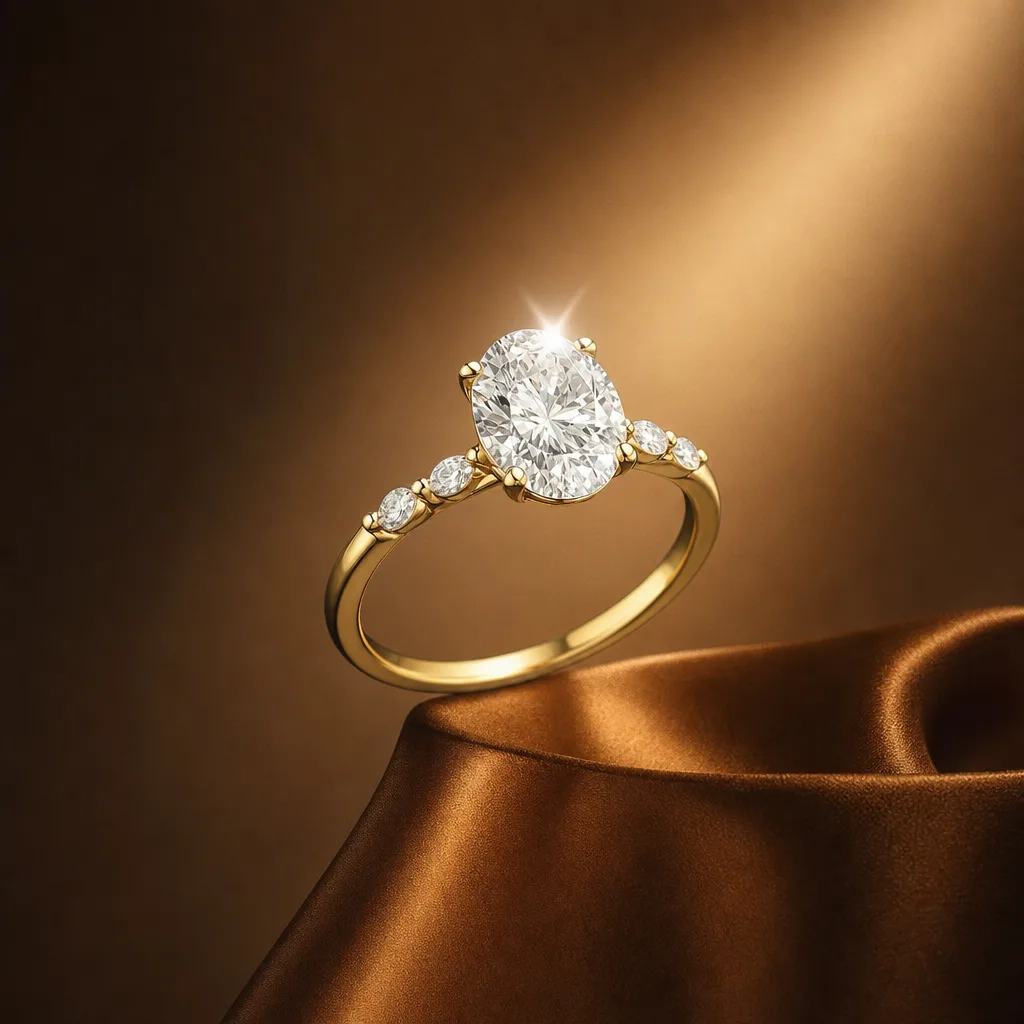
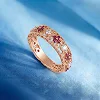
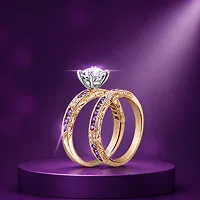
For rings, think about how much knocking the piece will take. A ring meets door handles, steering wheels and gym weights more than any other jewellery. A plain 22K band with a solid cross section is a sound pick, but a slim 22K band will bend. If the ring carries a diamond or gemstone, ask for 18K, which is how most stone-set rings are made. Browse rings, diamond jewellery and engagement pieces to see how listings state the grade.
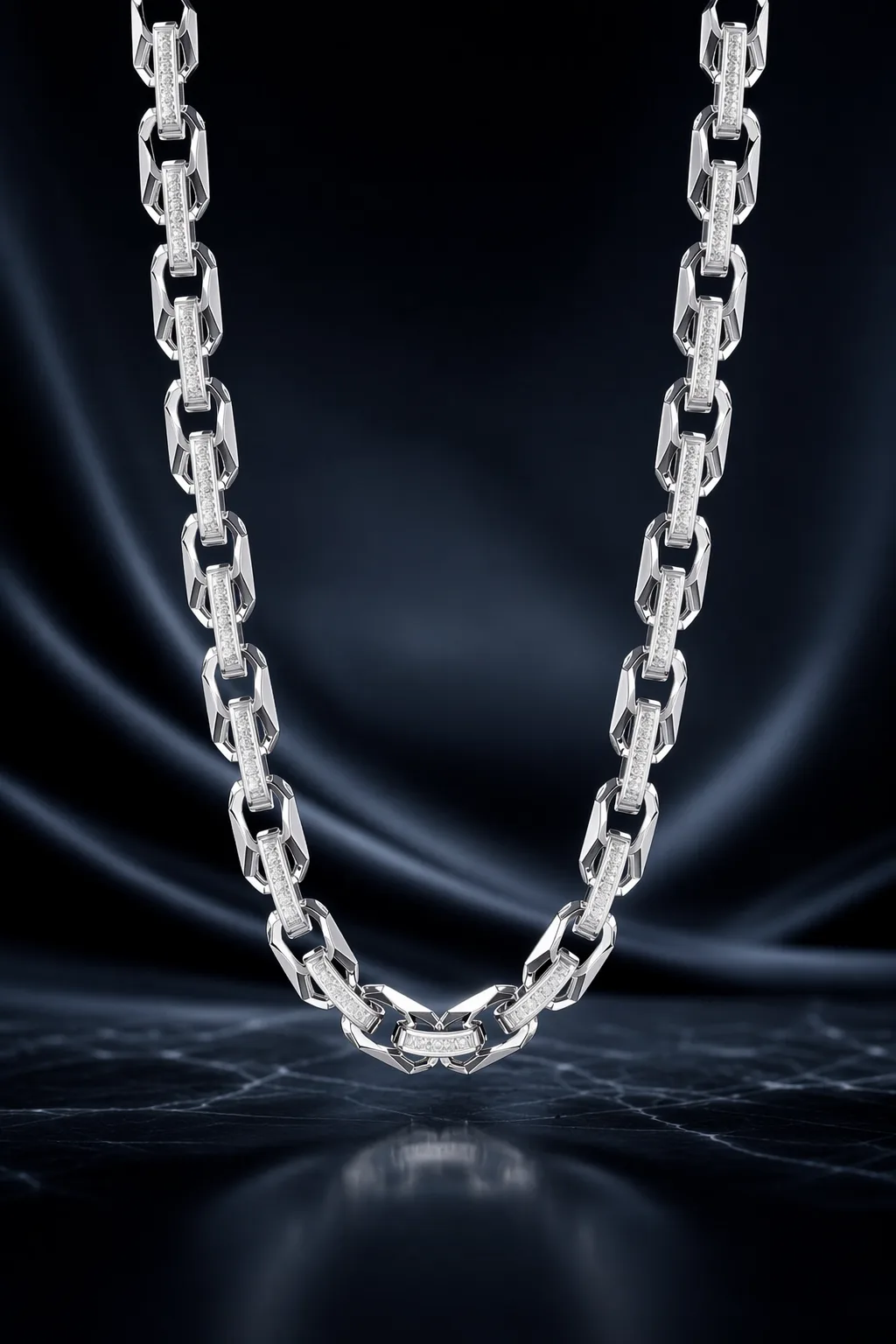
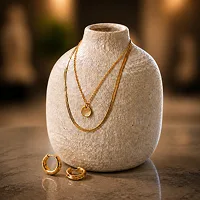
For necklaces, 22K is the default across gold jewellery and bridal jewellery because it keeps the colour and still carries heavy designs. The clasp is the weak point, so press it and open it before you buy. For a man's daily chain, look at chains and jewellery for men and favour heavier links. If you like carved, handworked designs, the antique jewellery category is almost entirely 22K.
Coins and bars
For coins and bars the logic reverses. Nobody wears them, so softness does not matter and purity is the only thing you pay for. Look for 999 or 999.9 on the coin and on the sealed assay pack. Keep the pack unopened, because it is what proves purity to the next buyer. Larger bars usually carry a lower premium per gram than small coins, since minting and packing costs are spread over more gold, though a small coin is easier to sell in part. Sealed bars from refiners such as MMTC-PAMP are one route if you want to buy outside a jewellery showroom.
Watch for 22K coins. Some jewellers sell them, and large brands such as Tanishq list both 22K and 24K coins in their ranges. A 22K coin holds 8.3% less gold per gram and often carries a making charge, so it works as a gift but is the wrong thing to hold for the gold. Read the label before you pay.
Festive buying adds one more factor. Coin counters get crowded around Dhanteras and Diwali, and premiums and stock differ from shop to shop. Compare two or three quotes rather than taking the first.
Where Large Jewellers Fit In
If you want a coin from a jeweller rather than a refiner, compare the coin ranges of Tanishq, Malabar Gold & Diamonds, Kalyan Jewellers and Joyalukkas. Check four things on each: the grade (22K or 24K), the premium or making charge on coins, the buyback terms, and whether they take back their own sealed packs. We link to these brands for comparison, not as an endorsement.
Mistakes Buyers Make Choosing Between 22K and 24K
Buying a 22K coin as an investment. You hold 8.3% less gold per gram, often after paying a making charge on it.
Reading the lower 22K rate as a saving. It is the same gold price on less gold. Compare cost per gram of pure gold, not the headline rate.
Wearing 24K every day. Expect dents, stretched links and metal lost to polishing. Keep it for occasions.
Ignoring buyback terms. The price you pay matters less than the price you can sell at. Get the policy for coins, bars and old jewellery in writing.
Trusting the tag over the stamp. A tag that says 22K is not proof. Match it with the hallmark, as shown in our hallmark check guide.
Buying in the festive rush without comparing. Premiums and stock vary widely in the days before Dhanteras and Diwali. A few minutes of comparison can save more than any gift offer.
The Short Version
If you will wear it, buy 22K, and ask for 18K when the piece holds stones. If you will hold it, buy a 24K coin or bar in a sealed pack. If you are gifting, a 24K coin carries more gold, while a 22K coin is acceptable only when you know what you are paying for.
Rates change daily, and the gap that matters, between the metal rate and the premium or making charge you are quoted, only shows up when you compare. Compare Today's 22K vs 24K Rate for your city, then browse gold jewellery from verified stores to see how each grade is priced and sold.