
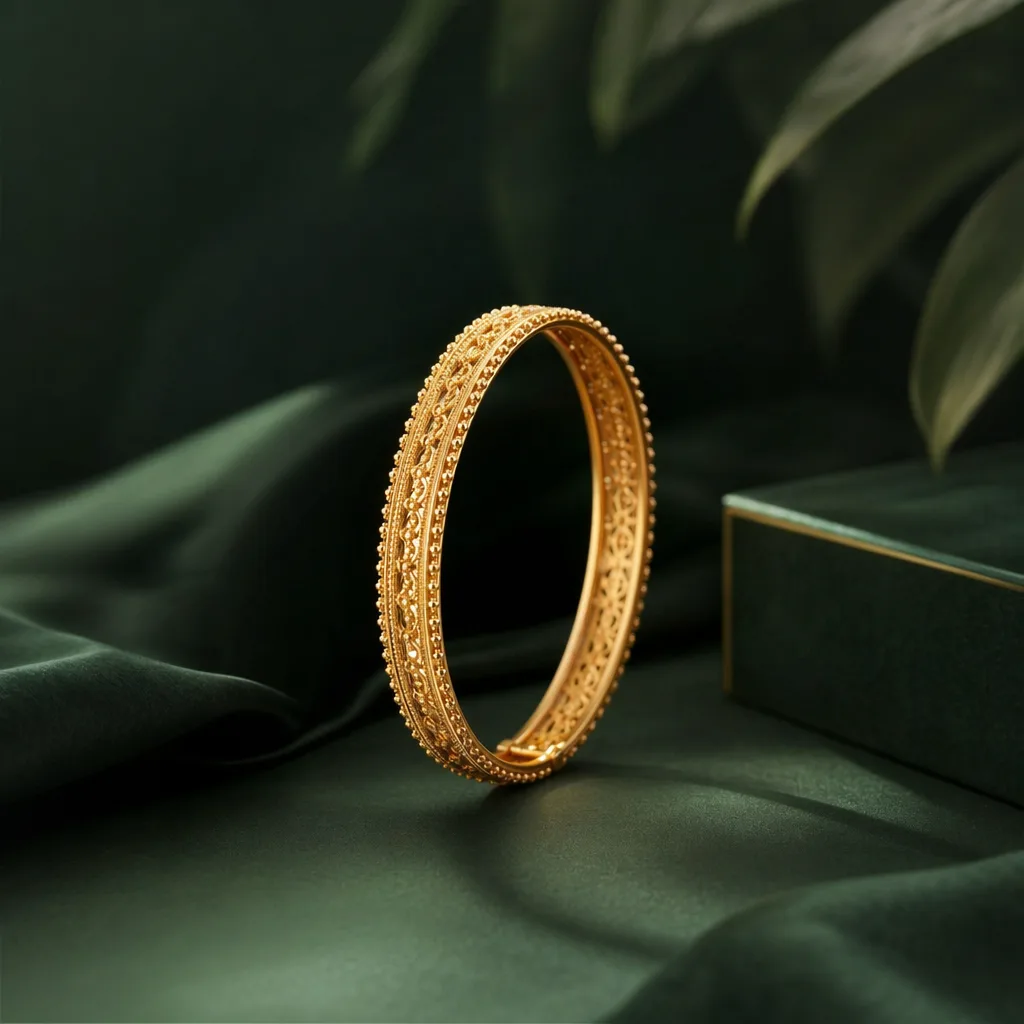







Somewhere in your family, there is a person who swears by KDM gold. Maybe it is a father who bought his first chain from a family jeweller in the 1990s, or an aunt who still says a “KDM 916” bangle beats anything the new showrooms sell. Tell them you are shopping for a hallmarked piece and the reply is usually a shrug and a story about how gold was always bought on trust.
That story is true. It is also why KDM gold is hard to judge today. Trust was the only guarantee available then, and a stamp on the piece is the guarantee available now. This guide puts the two side by side so you can decide on facts instead of nostalgia: what KDM actually is, what a hallmark actually proves, what the law says in 2026, and what each does to the money you get back when you sell.
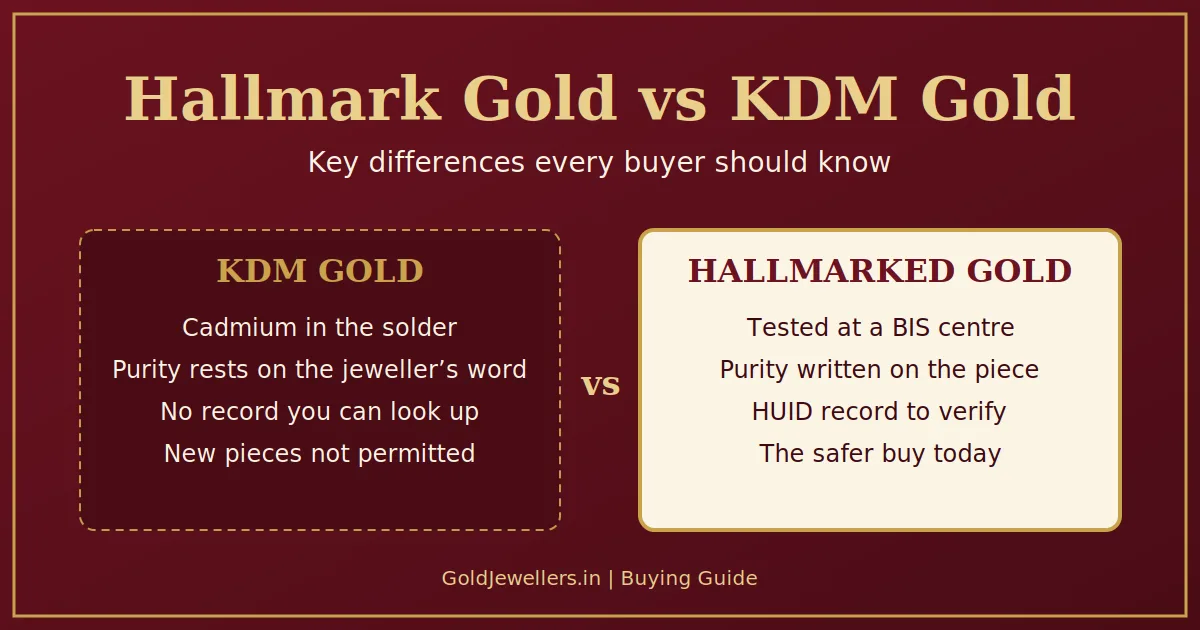
The short version. KDM describes how a piece was soldered, with cadmium in the solder. It says nothing verified about purity. A BIS hallmark records the result of a laboratory test, with a code anyone can look up. Cadmium solder is no longer permitted in gold jewellery in India, so a shop offering fresh KDM pieces today is cutting a corner. Old KDM jewellery is still legal to own and sell, but it usually has to be tested again before anyone pays full value. For a new purchase, hallmarked is the only sensible choice.
Where KDM Came From: A Soldering Problem
To understand KDM, start in a workshop, not a showroom. Hollow bangles, jali work, filigree chains, and temple pieces are built from many small parts that have to be joined. Joining gold needs solder, an alloy that melts at a lower temperature and flows into the seam.
The trouble is that ordinary solder, mixed with copper or silver to bring the melting point down, is much less pure than the gold around it. One account puts such solder at around 60 percent gold. Every joint became a soft spot in the karat of the whole piece.
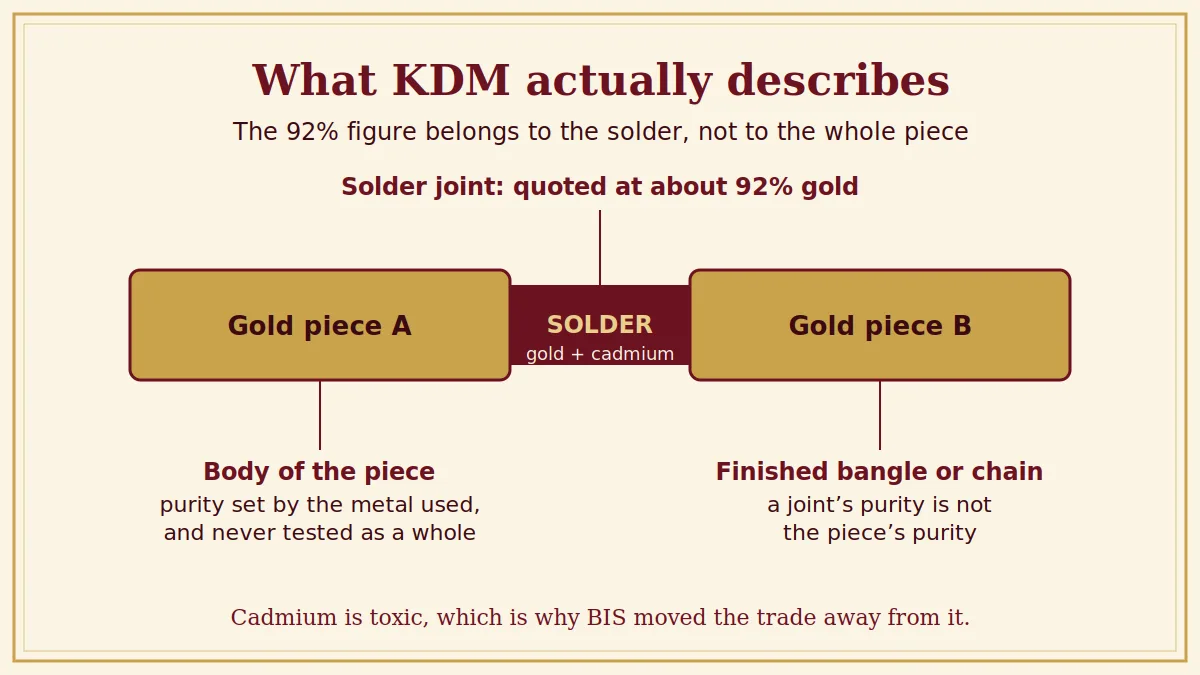
Cadmium offered a way out. Mixed with gold in a ratio commonly quoted as 92 parts gold to 8 parts cadmium, it made a solder that flowed cleanly and stayed close to 22K in colour and content. Jewellers could build intricate pieces with joint lines you could barely see, without visibly dropping the karat. The jewellery came to be called KDM, from the word cadmium.
Notice what that 92 percent figure describes: the solder. It says nothing about the sheet, wire or casting the solder was joining, and nobody was testing the finished piece. That gap is the whole story. A bill that said “916 KDM” recorded what the jeweller intended and promised, with no independent number behind it.
Why Cadmium Left the Workshop
Cadmium is a toxic metal. Heated, it gives off fumes, and the artisans who soldered with it day after day were the ones paying for it. Health problems at the bench are what led BIS to prohibit cadmium in gold jewellery solder, and workshops moved to solders based on other metals such as zinc.
For the person wearing a finished piece, the picture is less clear, and it would be wrong to claim that a KDM bangle poisons its owner. The documented harm was to the people making it. Still, nobody chose to keep cadmium once an alternative existed, and the prohibition is the reason new pieces are no longer made this way.
The takeaway for a buyer is practical. Cadmium soldering ended because of workshop safety. Mandatory purity testing, a separate reform, came later. Put together, those two changes are why old family jewellery and new hallmarked jewellery are really different products, and not just the same gold with a different sticker.
A Promise Versus a Test Result
Take a KDM piece and a hallmarked piece, both described as 22K. What stands behind each claim?
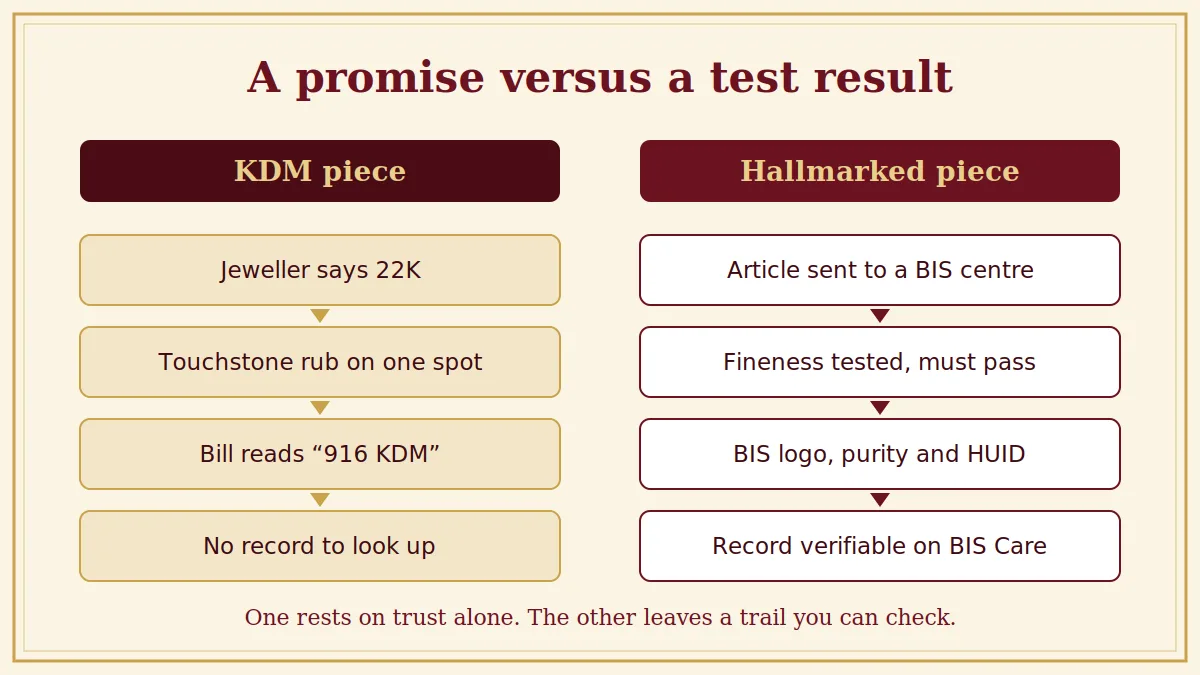
Behind the KDM piece stands the jeweller’s word and reputation. The usual check in those days was a scratch on a touchstone or a quick acid test, which samples one tiny spot. In a soldered piece, purity is not even from point to point. The body can read one way and the seam another, so a rub on a good spot proves little about the whole bangle. The buyer had no practical way to find out.
Behind the hallmarked piece stands a test at a BIS-recognised Assaying and Hallmarking Centre. A piece that falls short of the declared fineness does not get the mark. Once it passes, the article is given its own HUID, tied to a record that names the jeweller, the article type and the tested purity. You can look that record up, and so can the next buyer, the exchange counter and the lender. If the purity turns out wrong, there is a trail leading back to a seller and a centre.
Question | KDM piece | Hallmarked piece |
|---|---|---|
Who vouches for purity | The jeweller | A BIS-recognised testing centre |
What was tested | Usually nothing on record | The article, with the result recorded |
Record you can look up | None | HUID record on BIS Care |
Cadmium in the solder | Yes | Not permitted |
If purity is short | Your word against theirs | Traceable to seller and centre |
One honest limit: a hallmark confirms purity of the metal at the time of testing. It is not a warranty on design, workmanship or stones.
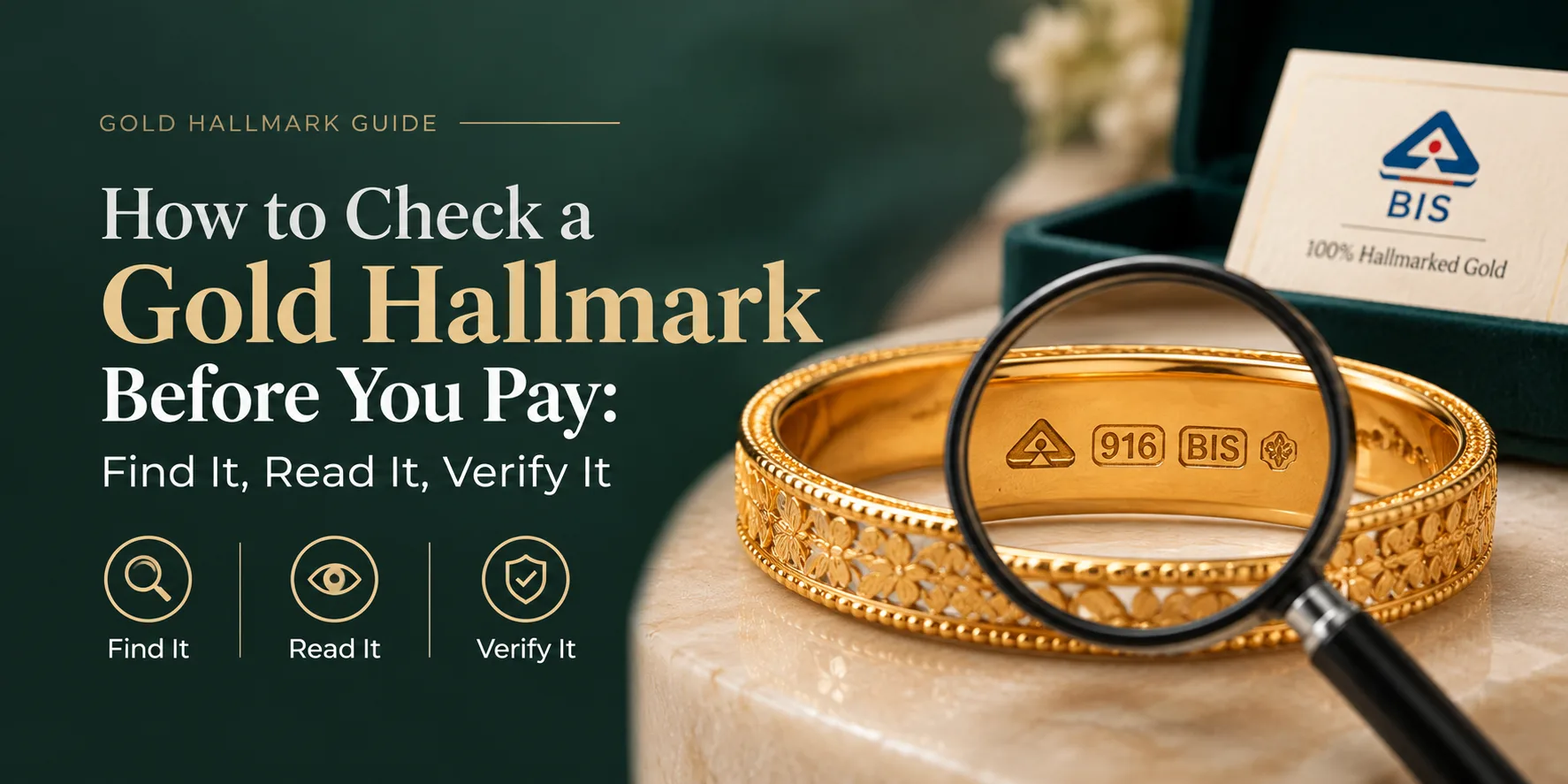
This guide stays on the comparison. For the mechanics, our step-by-step guide to checking a gold hallmark before you pay shows where the marks sit and how to verify the code, and the explainer on what 916, 750 and the other purity numbers mean covers the figures themselves.
Legal Status: What You Can Own and What Shops Can Sell
The law treats old KDM jewellery and new KDM jewellery very differently, and most family arguments blur the two.
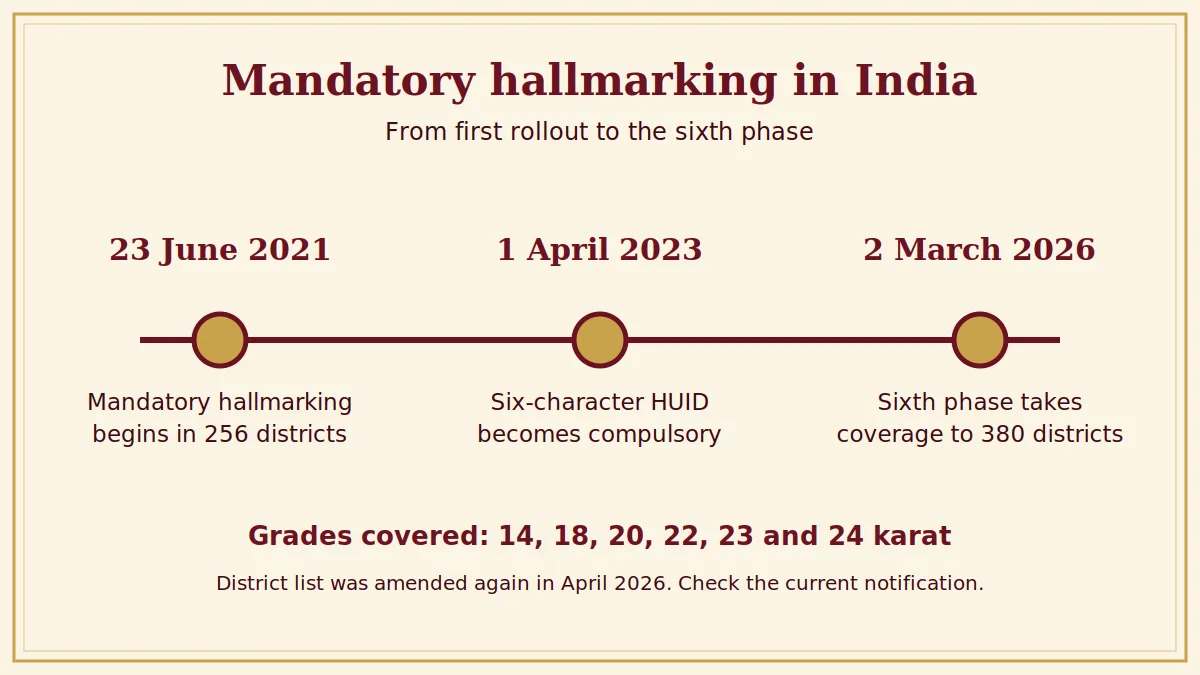
Mandatory hallmarking of gold jewellery began on 23 June 2021, in 256 districts that had a recognised testing centre.
It has widened in phases since. The sixth phase, effective 2 March 2026, expanded coverage to 380 districts, and an April 2026 amendment reportedly revised the district list again, so check the current notification for your district. Mandatory grades are 14, 18, 20, 22, 23 and 24 karat.
The six-character HUID has been compulsory on hallmarked pieces since 1 April 2023.
In a covered district, a jeweller cannot sell gold jewellery in those grades without the hallmark. A freshly made KDM piece cannot pass hallmarking because cadmium solder is not permitted, so it cannot be sold lawfully there as a new piece.
Some exemptions exist, such as certain export items and small sellers, so the rule does not reach every counter. Outside notified districts, hallmarking is not yet compulsory, which means a shop there can legally sell unmarked gold. Legal is not the same as tested.
Owning is another matter. KDM jewellery you already have is not illegal to hold, and BIS has clarified that consumers can sell old jewellery, hallmarked or not, to a jeweller. What is banned is making it with cadmium.
So the legal position is lopsided. Old KDM can be kept and passed on. New KDM is not something a licensed shop should be offering you.
What Happens to Resale Value
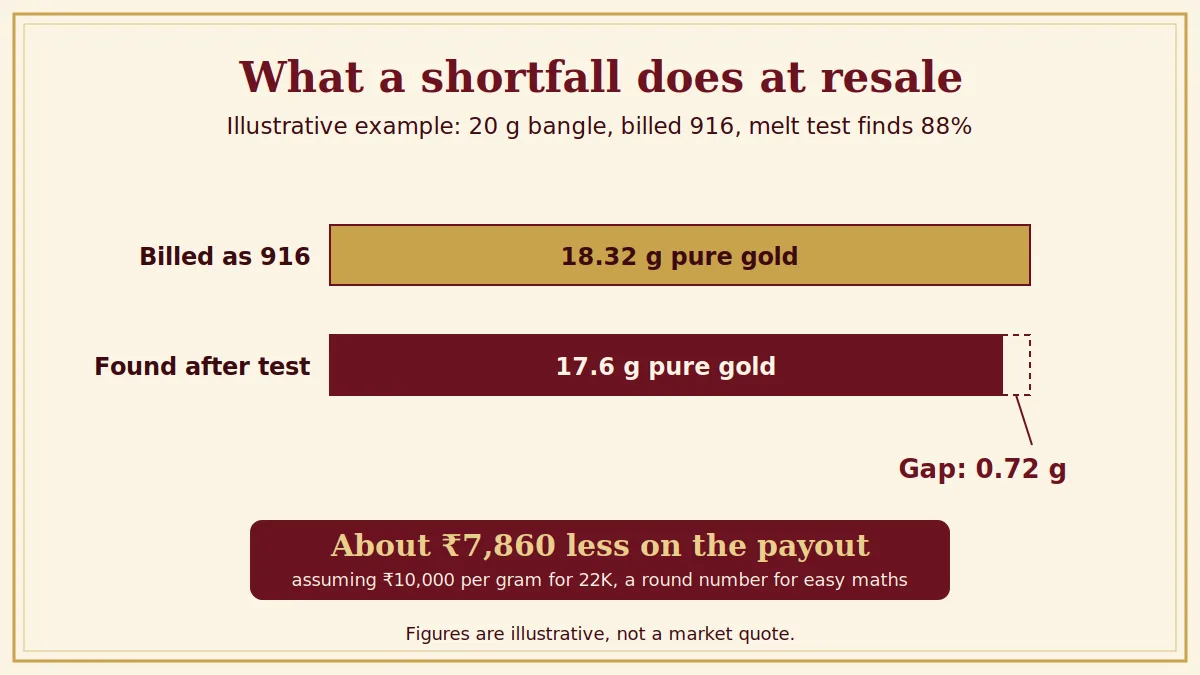
This is the part that decides most buying choices, so it is worth slowing down on. When you sell gold, the buyer pays for the fine gold in it, not for the name on the tag.
With a hallmarked piece, the purity is on record, the test confirms it quickly, and the payout follows the day’s rate and the jeweller’s exchange policy.
With a KDM piece, the buyer cannot lean on the old claim. The piece gets tested again, sometimes with a small melt sample, and the payout follows whatever the test finds. Buyers also price in the doubt: if they cannot trust the label, they protect themselves in the quote.
Here is what a shortfall looks like. Assume, only to keep the maths clean, that 22K gold costs ₹10,000 per gram. Your grandmother’s KDM bangle weighs 20 grams, and the old bill says 916. A melt test comes back at 88 percent instead of 91.6. The bangle holds 17.6 grams of pure gold against the 18.32 grams promised. In 22K terms, that is about 19.2 grams of value instead of 20, so the payout is roughly ₹1,92,140 instead of ₹2,00,000, a gap of about ₹7,860.
The figures are invented, but the mechanism is not. The shortfall comes off the payout at the moment of sale, possibly decades after the purchase, when nobody can go back to the jeweller who made the promise. Making charges paid at purchase are typically not returned on either piece, so what comes back is the gold, and only as much gold as the test confirms.
Where a shop pitched KDM as the cheaper way to buy 22K, the saving was a one-time discount set against a risk that came due at resale. A hallmarked piece removes that risk. To see what your gold is worth on the day, check the live gold rates page, and read how those rates are calculated so a quote does not surprise you.
If Your Family Already Owns KDM Jewellery
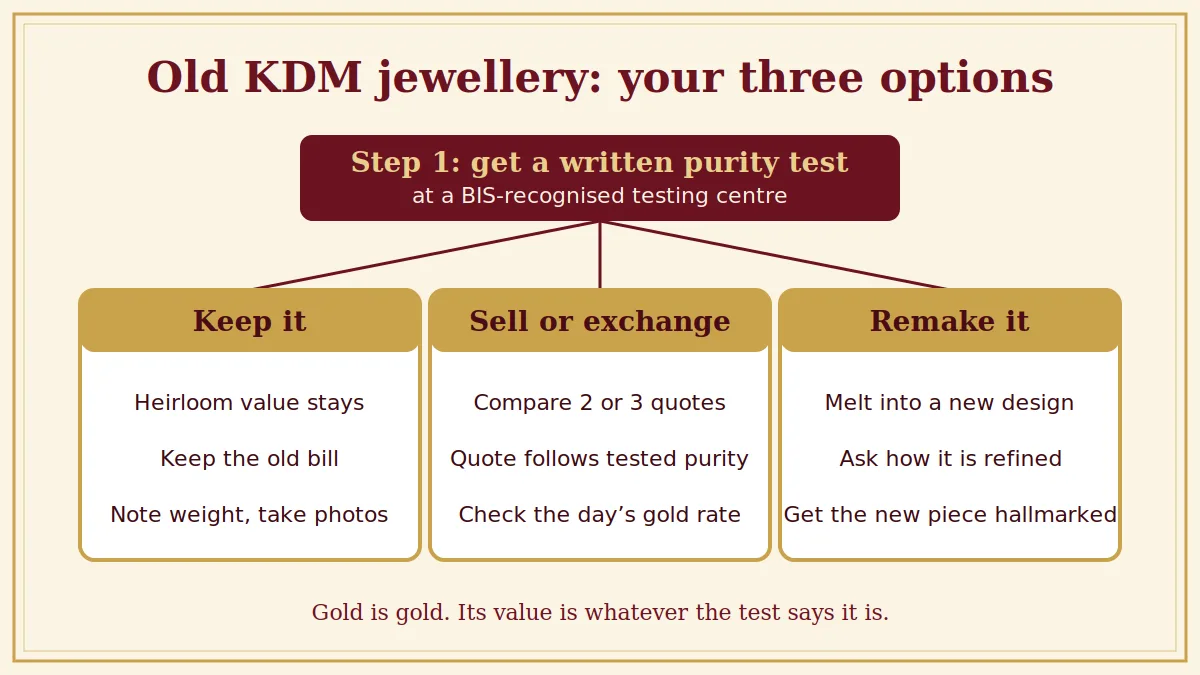
Nobody needs to panic. Gold is gold, and an old KDM bangle is worth whatever it assays to. What you want is a number from a test, not from memory.
Start with a purity test at a BIS-recognised centre, and keep the written result. From there you have three sensible paths.
Keep it. If the piece is an heirloom, nothing in the rules says old KDM jewellery must be given up. Keep the original bill, note the weight and photograph the piece.
Sell or exchange it. Take the written test result to two or three jewellers and compare quotes against the day’s rate. A jeweller who refuses to show how they tested is one to skip.
Remake it. Many families melt old pieces into new designs. Ask how the old gold will be melted and refined, since cadmium fumes were the original reason the trade moved away from this solder, and make sure the new piece comes back hallmarked with its HUID.
Old KDM-era designs, jali work and temple pieces have not disappeared. They are made today to current rules, and you can browse antique jewellery stores and bridal jewellery stores to see them in hallmarked form.
Answering the Arguments at the Family Table
If you are the one buying, you will probably hear some version of these four lines. Here are straight answers.
“KDM is purer.” The 92 percent figure belongs to the solder. A purity number for a joint is not a purity number for a bangle, and nothing certified the rest of the piece.
“My jeweller has been honest for thirty years.” He may well have been. Hallmarking does not question that. It adds a record that outlives the shop counter, the retirement, the lost bill and the son who took over the business.
“Hallmarked gold costs more.” The testing fee is small per article next to the value of the gold in it, and it buys a verified record. The saving on a KDM piece tends to come back out at resale, as the example above shows.
“Everyone in the market still takes KDM.” They do, after testing it and pricing in the doubt. Being accepted is not the same as being paid in full.
Red Flags That a Shop Is Still Selling the Old Way
A few signs suggest a shop is working like it is 1995:
The bill or tag says “KDM”, or the jeweller offers “KDM 916” as a cheaper alternative.
The hallmark is promised for later, after you have paid.
A 916 stamp appears with no BIS logo beside it, which makes it a private claim.
A discount on making charges is offered if you skip the hallmark.
Hollow, lightweight pieces are sold as old stock with no marks at all.
The shop is reluctant to give an itemised bill showing purity, net weight and rate.
If you spot one, you do not need to argue. Thank them and shop elsewhere. The hallmark checking guide explains what a correct stamp looks like, so you will know it when you see it.
Choose Hallmarked and Buy From Verified Jewellers
The case is simple once the two are lined up. KDM was a clever fix to a soldering problem, in a market where a handshake was the only paperwork. Hallmarking replaced the handshake with a test, a code and a record. The test protects you at purchase, and the record protects you when you sell.
The easiest way to apply this is to start with jewellers who already work to the standard. Browse trusted jewellers in your city, look through gold jewellery collections, and compare prices before you walk in. If you are not sure whether 22K is the right grade for what you want, our guide to 22K vs 24K gold helps you choose. Planning a trip to a big wholesale market? The rule travels with you: read our guide to the famous gold markets of India, then ask for the hallmark in every lane.
Readers who prefer Hindi can read the हॉलमार्क सोना क्या है? guide for the basics of BIS hallmarking.